Eddie Morton, a name less familiar today than some of his contemporaries, occupies a pivotal, albeit complicated, space in the history of early 20th-century American music. Emerging during the nascent years of the recording industry, Morton carved a niche for himself as a dynamic vocalist and entertainer, bridging the gap between ragtime, vaudeville, and the early stirrings of jazz. His performances, characterized by their infectious energy and skillful blend of musical styles, helped popularize songs that resonated with audiences across the nation. However, Morton's legacy is also intertwined with the racial stereotypes prevalent during the era, particularly in his most famous, and now controversial, song, "The Red Hot Hottentot." This biography delves into the life, career, and complex legacy of Eddie Morton, exploring his contributions to music, his stage presence, the technical limitations of early recordings, and the ongoing debate surrounding his work in the context of historical racism and cultural appropriation. 1900-1909 Within the broader context of the 1900-1909 Music Era, their work remains timeless.
In-depth Analysis of Musical Style/Evolution
Eddie Morton's musical style can be described as a vibrant melting pot of influences, reflecting the diverse musical landscape of the early 1900s. Primarily classified as a ragtime performer, his music also incorporated elements of vaudeville song, minstrelsy (a problematic influence that cannot be ignored), and nascent jazz rhythms. He was not an instrumentalist; his domain was the voice, and he wielded it with remarkable energy and control. Morton's vocals were characterized by a clear, strong tenor, capable of delivering both nuanced melodies and robust, almost declamatory passages. His phrasing was precise, reflecting the syncopated rhythms that defined ragtime, while his dynamic range allowed him to transition seamlessly between playful banter and powerful emotional expression.
Morton's song choices played a significant role in shaping his musical identity. He frequently performed songs written by others, often composers associated with Tin Pan Alley, the center of popular music publishing in New York City. These songs often featured catchy melodies and simple, relatable lyrics, designed for mass appeal. However, Morton's interpretations often injected a unique flavor, infusing them with a distinctly African-American musical sensibility. This involved rhythmic variations, improvisational embellishments, and a characteristic vocal delivery that drew upon the traditions of black performance. While he didn't compose much material attributed directly to him, his interpretive skills and energetic performances were critical to the success and spread of these early popular tunes.
The evolution of Morton's style, if any, is difficult to chart with absolute certainty due to the limited number of recordings available. However, listening to his discography, one can discern a gradual refinement of his vocal technique and a growing confidence in his stage persona. Early recordings may exhibit a more restrained approach, possibly influenced by the limitations of the recording technology. Later recordings, on the other hand, often showcase a more assertive and flamboyant style, suggesting a performer who had found his voice and was eager to connect with his audience. It's important to note that "evolution" in this era wasn't always about radical stylistic shifts, but rather a gradual maturation of skill within an established genre. The goal was often to amplify existing sounds and styles for wider appeal rather than reinvent them.
The 'Look': Fashion & Aesthetics Deep Dive
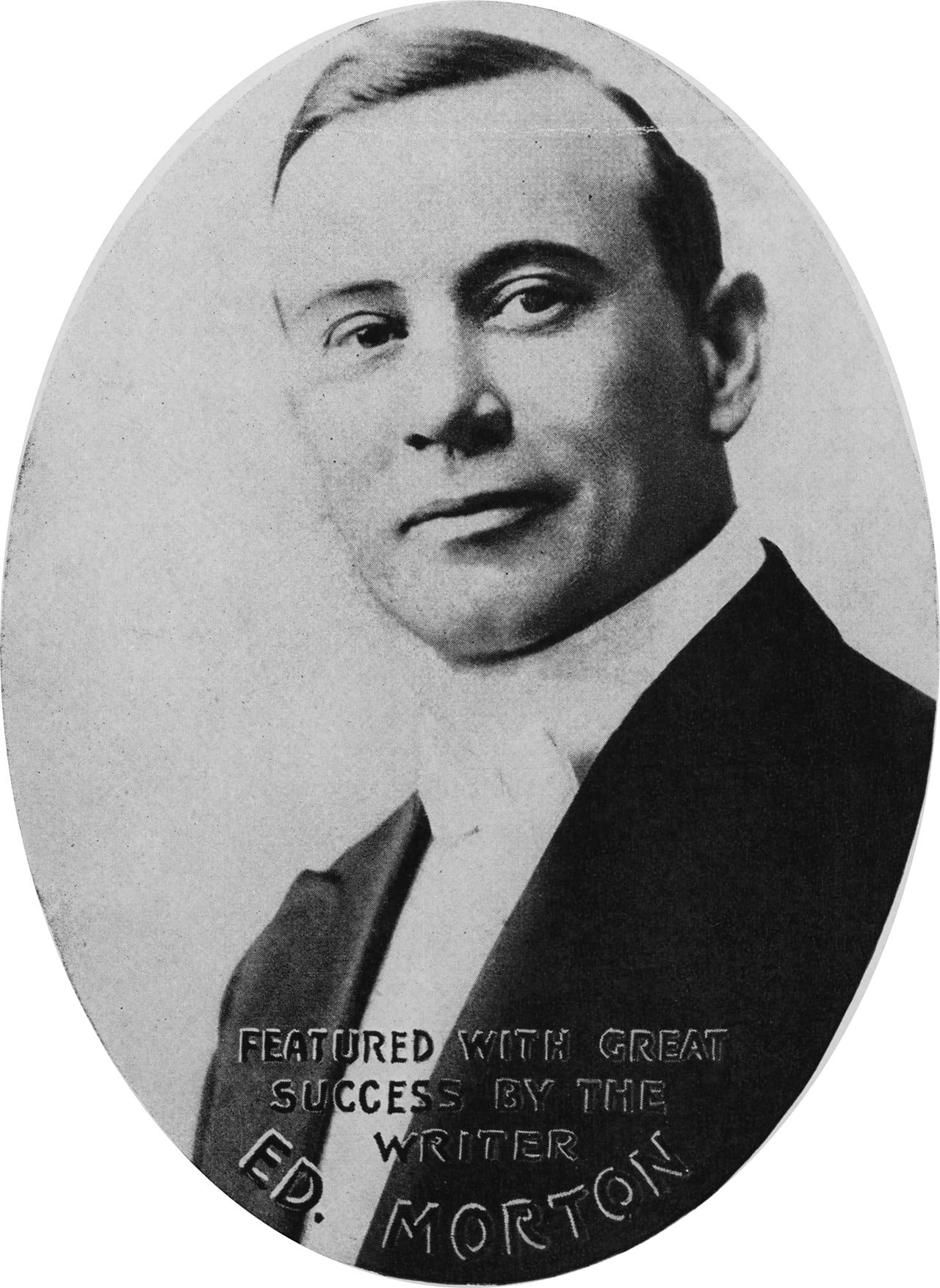
While surviving visual documentation of Eddie Morton is scarce, we can piece together a picture of his stage persona through contemporary descriptions and the broader context of vaudeville fashion. Like many performers of his era, Morton likely embraced a sharply dressed aesthetic, designed to command attention and project an image of sophistication and success. The typical vaudeville performer favored well-tailored suits, often made of dark wool or tweed, reflecting the practical demands of travel and performance. These suits would have been meticulously fitted, emphasizing a clean and polished silhouette. Waistcoats, often adorned with subtle patterns, added a touch of elegance, while crisp white shirts and carefully knotted ties completed the ensemble.
Accessories played a crucial role in defining Morton's stage presence. Hats, such as bowlers, fedoras, or straw boaters, were essential elements of the vaudeville wardrobe, adding height and visual interest. Canes, often made of polished wood and topped with ornate handles, served as both props and extensions of the performer's physicality, allowing for expressive gestures and movements. These accessories were not merely decorative; they were integral to the construction of a character, helping to convey a sense of confidence, wit, and charm.
Beyond the specific garments and accessories, Morton's overall aesthetic likely emphasized a sense of dynamism and energy. He was, above all, a performer, and his clothing and appearance would have been carefully chosen to enhance his stage presence and connect with his audience. This might have involved choosing fabrics and colors that reflected the mood and tempo of his songs, or incorporating subtle details that hinted at his personality and background. While the specifics of Morton's personal style remain somewhat elusive, it's clear that he understood the importance of visual presentation in creating a compelling and memorable performance.
Engineering & Sound Production Analysis
Understanding the context of early sound recording is crucial to appreciating Eddie Morton's work. His recordings were made during the acoustic era, a period characterized by its rudimentary yet ingenious methods of capturing sound. In this era, electrical amplification was non-existent; sound was captured directly onto wax cylinders or discs using purely mechanical means. A large horn was used to focus sound waves onto a diaphragm, which in turn vibrated a stylus. This stylus then etched the vibrations onto a rotating cylinder or disc, creating a physical representation of the sound.
The limitations of this technology significantly impacted the recording process and the resulting sound quality. The dynamic range was extremely limited, meaning that loud sounds could easily overload the system, while quieter sounds were often lost in the background noise. The frequency response was also restricted, particularly at the high and low ends of the spectrum, resulting in a sound that often lacked clarity and detail. Performers had to be strategically positioned in front of the recording horn to maximize their sound, and movements were carefully controlled to avoid creating unwanted noise.
Despite these limitations, early recordings offer a unique and valuable glimpse into the sounds of the past. While the audio quality may be primitive by modern standards, these recordings capture the raw energy and immediacy of live performance. They also reveal the ingenuity and skill of the engineers and performers who worked within the constraints of the technology. Listening to Eddie Morton's recordings, one can hear the power of his voice and the rhythmic drive of his music, even through the hiss and crackle of the antique recording medium. These recordings are not just historical artifacts; they are living documents that bring the past to life.
Cultural Impact & Legacy
Eddie Morton's cultural impact lies primarily in his role as a popularizer of ragtime and proto-jazz vocal styles. He helped bring these musical forms to a wider audience through his recordings and performances, contributing to their growing popularity during the early 20th century. His energetic delivery and engaging stage presence made him a favorite among vaudeville audiences, and his recordings were widely distributed and enjoyed across the country. While not necessarily an innovator in the strictest sense, Morton was a skilled interpreter and performer who helped to shape the sound of popular music in his era.
However, Morton's legacy is also complicated by the racial stereotypes that were prevalent in some of his material, most notably in "The Red Hot Hottentot." This song, which features caricatured depictions of African people, reflects the problematic attitudes and prejudices that were common during the early 20th century. While it's important to acknowledge the historical context in which these songs were created, it's equally important to recognize the harm they caused and the perpetuation of racist stereotypes. Examining Morton's work provides a crucial opportunity to engage with the complexities of early American popular culture and to confront the ways in which music can both reflect and reinforce societal biases.
Today, Morton's recordings are primarily of interest to music historians and collectors. While his name may not be widely known among the general public, his work provides valuable insights into the development of American popular music and the cultural landscape of the early 20th century. By studying his recordings, we can gain a better understanding of the musical styles, performance practices, and social attitudes that shaped this formative period in American history.
Critical Reception (Then vs Now)
During his active years, Eddie Morton was generally well-received by audiences and critics alike. He was praised for his energetic performances, his clear vocal delivery, and his ability to connect with his audience. Reviews of his recordings often highlighted his ability to bring popular songs to life, infusing them with his own unique style and personality. While detailed critical analyses of his work are scarce due to the limited scope of music criticism in that era, anecdotal evidence suggests that he was regarded as a talented and engaging performer.
In contemporary scholarship, Morton's work is viewed with a more nuanced and critical perspective. While his contributions to popularizing ragtime and early jazz vocal styles are acknowledged, his legacy is also complicated by the presence of racial stereotypes in some of his material. Modern critics often grapple with the challenge of reconciling the historical context in which these songs were created with the ethical implications of perpetuating racist imagery and tropes. This has led to a more cautious and critical assessment of his work, with scholars emphasizing the need to understand his music within the broader context of racial inequality and cultural appropriation.
The song "The Red Hot Hottentot," in particular, has come under intense scrutiny. While it was undoubtedly popular during its time, it is now widely recognized as a deeply offensive and harmful representation of African people. Modern critics often use this song as a case study to illustrate the ways in which popular music can be used to reinforce racist stereotypes and to perpetuate harmful narratives about race and culture. The evolving critical reception of Eddie Morton's work reflects a broader shift in societal attitudes towards race and representation, highlighting the importance of critically examining the past and confronting the legacies of racism.
Conclusion
Eddie Morton's story is a complex and compelling one, offering a valuable window into the world of early 20th-century American music. He was a talented and engaging performer who played a significant role in popularizing ragtime and early jazz vocal styles. His recordings, while technically limited, capture the energy and vibrancy of his performances, providing a unique glimpse into the sounds of the past. However, his legacy is also intertwined with the racial stereotypes that were prevalent in some of his material, particularly in "The Red Hot Hottentot." This song serves as a stark reminder of the problematic attitudes and prejudices that existed during this era and the ways in which popular music could be used to reinforce harmful stereotypes.
Ultimately, Eddie Morton's story is a reminder that the past is not always simple or easy to understand. By engaging with his work in a critical and nuanced way, we can gain a better understanding of the complexities of American musical history and the ongoing struggle for racial equality. His contributions to music, alongside the problematic elements of his repertoire, offer a powerful case study for understanding the evolution of American culture and the ongoing need for critical reflection and social justice. He remains a significant, if complicated, figure in the history of ragtime and early popular music.