A Colossus of the Opera Stage: Introducing Edouard de Reszke
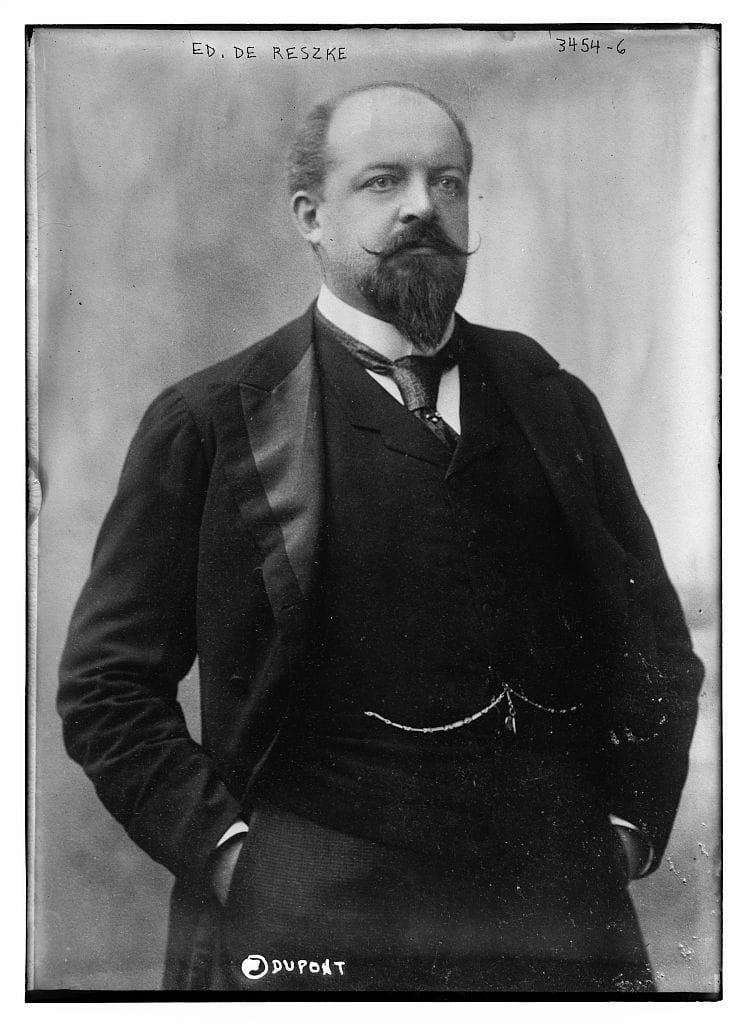
Edouard de Reszke. The name resonates with a power and authority that mirrors the very essence of his legendary operatic bass voice. Born in Poland in 1853, de Reszke carved a path of extraordinary success in the late 19th and early 20th centuries, becoming a dominant force on the world’s most prestigious opera stages. He wasn't merely a singer; he was a presence, a force of nature whose vocal prowess and imposing stature combined to create unforgettable performances. While his brother, Jean de Reszke, achieved even greater fame as a tenor, Edouard stood firmly in his own right, captivating audiences with his depth, range, and dramatic interpretation, especially in roles that demanded both vocal power and commanding stage presence. His career spanned a golden age of opera, a time when singers were treated as true stars, and de Reszke shone brightly among them. 1900-1909 Historically, they are inseparable from the identity of the 1900-1909 Music Era.
De Reszke’s journey to operatic stardom began with rigorous training and a deep-seated passion for music. He, along with his siblings, benefited from a musically inclined family. This nurturing environment allowed him to cultivate his natural talent and develop the technical skills necessary to conquer the demanding repertoire that awaited him. His dedication and relentless pursuit of perfection shaped him into the vocal titan who would eventually dominate the opera world. While recordings from his era are limited and often imperfect, the countless accounts from critics and fellow performers paint a vivid picture of a voice that was both immense and nuanced, capable of both earth-shattering pronouncements and moments of profound tenderness.
Musical Style and the Art of Vocal Domination
Edouard de Reszke’s musical style was defined by its raw power, extensive range, and remarkable agility for a voice of such substantial weight. He was particularly celebrated for his interpretation of roles that demanded a true bass profundity, roles that plumbed the depths of human emotion and required a voice capable of conveying both authority and vulnerability. His mastery of French and Italian operatic styles was evident, but it was his affinity for Wagnerian roles that truly solidified his legendary status.
Consider his portrayal of Mephistopheles in Gounod's *Faust*. De Reszke brought a diabolical charm and a chillingly seductive quality to the role, using his voice to paint a portrait of a cunning and manipulative devil. His lower register rumbled with malevolent intent, while his higher notes retained a surprising lightness, allowing him to navigate the complex musical passages with ease. He wasn't just singing the notes; he was embodying the character, using his voice as a tool to convey the inner workings of Mephistopheles' twisted mind. His "Le veau d'or est toujours debout!" ("The Golden Calf is Always Standing!") was reportedly a showstopper, filled with both sardonic humor and a terrifying undercurrent of power.
But it was in Wagnerian opera that de Reszke truly found his niche. His Landgrave Hermann in *Tannhäuser* was a revelation. The role demands a voice of immense authority and dignity, capable of conveying both the Landgrave’s regal status and his inner turmoil. De Reszke’s voice possessed the necessary gravitas, and he used it to create a character of profound complexity. His pronouncements were delivered with unwavering conviction, and his moments of vulnerability were rendered with touching sincerity. He excelled in projecting the Landgrave's moral authority but also hinted at the weariness of leadership. His performances of Wagner are especially valuable considering the composer's own exacting standards and preferences.
While the limited recording technology of the time prevents us from fully appreciating the subtleties of de Reszke’s vocal technique, contemporary accounts consistently highlight his impeccable breath control, his clear diction, and his ability to maintain a consistent tone throughout his extensive range. He was a master of legato, seamlessly connecting notes and phrases to create a smooth and flowing vocal line. He was also a skilled actor, using his voice to convey a wide range of emotions, from joy and love to anger and despair. His attention to detail and his unwavering commitment to artistic integrity made him a true master of his craft.
The 'Look': Fashion, Aesthetics, and Stage Presence
While concrete details regarding Edouard de Reszke's personal fashion sense are scarce, his stage presence and the visual impact he made in operatic productions were undeniably significant. The opera world of the late 19th and early 20th centuries was a spectacle, and singers were expected to embody their roles not only vocally but also visually. Costumes were elaborate, sets were grand, and the overall aesthetic was designed to transport audiences to another world.
De Reszke’s imposing stature was a crucial element of his stage presence. He was a physically large man, which lent him a natural air of authority, particularly in roles such as the Landgrave or Mephistopheles. Costume designers would have undoubtedly capitalized on his physique, creating outfits that accentuated his size and power. Imagine him as the Landgrave, resplendent in royal robes, his presence dominating the stage. Or as Mephistopheles, cloaked in darkness, his eyes gleaming with malevolent intent. The visual impact would have been stunning.
Furthermore, makeup played a vital role in shaping the characters he portrayed. As Mephistopheles, he would have undoubtedly sported dramatic makeup to accentuate his demonic features, perhaps with exaggerated eyebrows, darkened eyes, and a sinister smile. As the Landgrave, his makeup would have been more subtle, designed to convey wisdom, dignity, and perhaps a hint of weariness. The goal was to transform him into the character, to make him believable and engaging for the audience.
Beyond costumes and makeup, de Reszke's posture and movements would have contributed significantly to his overall stage presence. He likely possessed a commanding posture, projecting confidence and authority. His gestures would have been deliberate and expressive, designed to convey the emotions of the character. He was not merely standing and singing; he was acting with his entire body, creating a complete and immersive theatrical experience. While we lack detailed photographs or film footage, the descriptions from contemporary critics and audience members consistently paint a picture of a performer who commanded the stage with both his voice and his physical presence.
Engineering & Sound Production Analysis: A Voice for the Ages
Edouard de Reszke’s vocal technique can be understood as a masterful application of the principles of acoustics and physiology, even if those principles weren't explicitly understood in the same scientific terms as they are today. His ability to fill the vast opera houses of the late 19th century without amplification is a testament to the power and efficiency of his vocal production.
Central to his technique was undoubtedly a deep understanding of breath control. He would have learned to manage his airflow with precision, using his diaphragm to support his voice and maintain a consistent tone throughout his range. This controlled breath support would have allowed him to sustain long phrases, project his voice powerfully, and execute complex vocal passages with ease. It's likely he employed techniques similar to *appoggio*, a method emphasizing controlled exhalation and muscular support to avoid strain.
Resonance played a crucial role in the power and richness of his voice. He would have learned to manipulate the resonators in his head and chest to amplify his sound and create a vibrant and resonant tone. His understanding of vocal placement – where he focused the sound within his vocal tract – would have been crucial to achieving optimal resonance and projection. His ability to connect his chest voice and head voice seamlessly would have been essential for navigating the demanding bass repertoire. A voice of his size needs careful management of passaggio to avoid breaks or abrupt shifts in tone.
While recordings from his era are rudimentary, they offer glimpses into the quality of his voice. Even through the limitations of early recording technology, the power and clarity of his voice are evident. However, these recordings can only hint at the true scale and impact of his live performances. They lack the dynamic range and frequency response necessary to capture the full richness and complexity of his sound. Therefore, we must rely heavily on contemporary accounts to fully appreciate the magnitude of his vocal achievement. These accounts consistently describe a voice of immense power, exceptional clarity, and remarkable beauty, a voice that truly filled the opera house and captivated audiences.
Cultural Impact & Legacy: An Enduring Echo
Edouard de Reszke’s impact on the opera world was profound and enduring. He helped to define the role of the operatic bass in the late 19th and early 20th centuries, setting a standard of vocal excellence and dramatic interpretation that continues to inspire singers today. His performances of Wagnerian roles, in particular, contributed significantly to the popularization of Wagner's music and helped to establish Wagner as one of the greatest composers of all time.
He was also a significant figure in the development of opera as a global art form. He performed in the leading opera houses of Europe and America, bringing his artistry to audiences around the world. His presence helped to elevate the status of opera and attract new audiences to the art form. He was a true international star, recognized and celebrated for his talent and dedication.
Furthermore, de Reszke contributed to the training of future generations of opera singers. While he didn't have a formal teaching position for much of his career, he certainly influenced younger singers through his performances and his interactions with them backstage. He served as a role model, demonstrating the importance of hard work, discipline, and artistic integrity. He inspired countless singers to pursue their dreams and strive for excellence.
Although he retired relatively early due to health issues, his legacy lives on through the countless accounts of his performances, the few existing recordings, and the memories of those who witnessed his artistry firsthand. He remains a towering figure in the history of opera, a testament to the power of the human voice and the enduring appeal of operatic drama. His influence can still be felt today, inspiring singers and audiences alike to appreciate the beauty and power of opera.
Critical Reception: Then vs. Now
During his active career, Edouard de Reszke enjoyed widespread critical acclaim, solidifying his place as one of the foremost basses of his era. Critics consistently lauded his vocal power, his extensive range, and his commanding stage presence. However, some contemporary critics occasionally noted a perceived lack of dramatic subtlety in his performances, suggesting that he relied more on vocal prowess than nuanced acting. Despite this minor criticism, the overwhelming consensus was that he was a singer of exceptional talent and a force to be reckoned with on the opera stage.
In contemporary assessments, Edouard de Reszke’s legacy is viewed with a more nuanced perspective. While the limitations of early recording technology make it difficult to fully assess the quality of his voice, modern critics rely heavily on contemporary accounts and historical context to understand his significance. He is now recognized not only for his vocal power but also for his contribution to the development of opera as a global art form and his influence on future generations of singers. The occasional criticisms regarding dramatic subtlety are often contextualized within the performance practices of his time, where vocal display was often prioritized over naturalistic acting.
Furthermore, modern critics are more likely to appreciate the historical significance of de Reszke's performances. He sang during a golden age of opera, a time when singers were treated as true stars and opera houses were cultural centers. His performances were part of a larger cultural phenomenon, and his legacy is inextricably linked to the history of opera itself. He is now seen as a pivotal figure in that history, a singer who helped to shape the art form and pave the way for future generations of performers.
In essence, while both contemporary and modern critics acknowledge Edouard de Reszke’s exceptional vocal talent, modern assessments tend to be more nuanced and historically informed. He is now viewed not only as a great singer but also as a cultural icon and a significant figure in the history of opera.
Conclusion: The Enduring Resonance of a Bass Virtuoso
Edouard de Reszke was more than just an operatic bass; he was a phenomenon. His powerful voice, commanding stage presence, and unwavering dedication to his craft made him a true legend of the opera world. From his captivating portrayals of Mephistopheles to his authoritative renditions of Wagnerian roles, he left an indelible mark on the art form, inspiring singers and audiences alike.
While the limitations of early recording technology prevent us from fully appreciating the nuances of his voice, the countless accounts from contemporary critics and audience members paint a vivid picture of a performer who possessed both immense vocal power and remarkable artistic sensitivity. He was a master of his craft, a true virtuoso who used his voice to convey a wide range of emotions and bring characters to life on the opera stage.
His legacy continues to resonate today, reminding us of the power of the human voice and the enduring appeal of operatic drama. Edouard de Reszke remains a towering figure in the history of opera, a testament to the transformative power of music and the enduring legacy of artistic excellence. His name will forever be associated with the golden age of opera, a time when singers were treated as true stars and the art form reached its zenith. He was, and remains, a true bass virtuoso.