Comprehensive Introduction
Enrico Caruso, a name synonymous with the golden age of opera, wasn't just a singer; he was a cultural phenomenon. Dominating the operatic stage and the burgeoning recording industry throughout the 1910s, his voice became the defining sound of early 20th-century vocal artistry. Born in Naples in 1873, his journey from humble beginnings to international stardom is a testament to his innate talent, relentless work ethic, and a touch of fortunate timing. This was an era ripe for a voice like Caruso's, a voice that could not only fill the grandest opera houses but also, crucially, translate its power and emotion through the relatively primitive medium of early recording technology. More than just a gifted tenor, Caruso was a pioneer, bridging the gap between the traditional world of opera and the modern age of mass media, creating a template for future generations of crossover artists. His impact extends far beyond the realm of classical music; he fundamentally changed the way people consumed and appreciated vocal performance, effectively launching the recording industry into a new stratosphere. 1910-1919 They played a crucial role in the development of the 1910-1919 Music Era.
The decade of the 1910s represents the zenith of Caruso's career. He was at the peak of his vocal powers, commanding record-breaking fees for his performances at the Metropolitan Opera in New York, and simultaneously generating unprecedented revenue for the Victor Talking Machine Company through his numerous recordings. His repertoire during this period was vast and demanding, encompassing a wide range of operatic roles from Verdi and Puccini to Leoncavallo and Donizetti. He wasn't simply performing these roles; he was embodying them, bringing a raw emotional intensity and dramatic flair that resonated deeply with audiences. It was a decade of intense activity, marked by constant travel, relentless performance schedules, and the burgeoning demands of a recording career that required him to adapt his performance style to suit the limitations of the technology.
In-depth Analysis of Musical Style/Evolution
Caruso's musical style was characterized by a powerful, resonant tenor voice, notable for its distinctive timbre and exceptional projection. He possessed a "spinto" tenor, a voice that combines the lyrical beauty of a light tenor with the dramatic power of a heavier one. This allowed him to tackle a diverse repertoire, from the soaring melodies of "La donna è mobile" to the anguished cries of "Vesti la giubba." His phrasing was impeccable, marked by a natural and unaffected delivery that conveyed a profound understanding of the text and music. He understood the importance of diction, ensuring that every word was clear and meaningful, even in the most demanding passages.
While his vocal technique was undoubtedly impressive, it was Caruso's emotional delivery that truly set him apart. He had an uncanny ability to connect with his audience on a deeply personal level, conveying the raw emotions of his characters with an intensity that few could match. He wasn't simply singing the notes; he was living the role, immersing himself in the character's joys, sorrows, and struggles. This emotional commitment was evident in every performance, whether on the opera stage or in the recording studio. One of the key elements to his success was his ability to make the listener feel as though he was singing directly to them.
During the 1910s, Caruso's style remained largely consistent, although subtle refinements can be observed in his recordings. As he gained experience and confidence, his interpretations became more nuanced and insightful. He explored the dramatic possibilities of each role with greater depth, delving into the psychological complexities of his characters. His use of vocal color became more sophisticated, allowing him to express a wider range of emotions. While some critics occasionally pointed to a tendency towards melodrama, the vast majority recognized the unparalleled vocal control and interpretive skill that underpinned his performances. He evolved not by drastically changing his core style, but by honing and refining his already formidable talents.
The 'Look': Fashion & Aesthetics Deep Dive
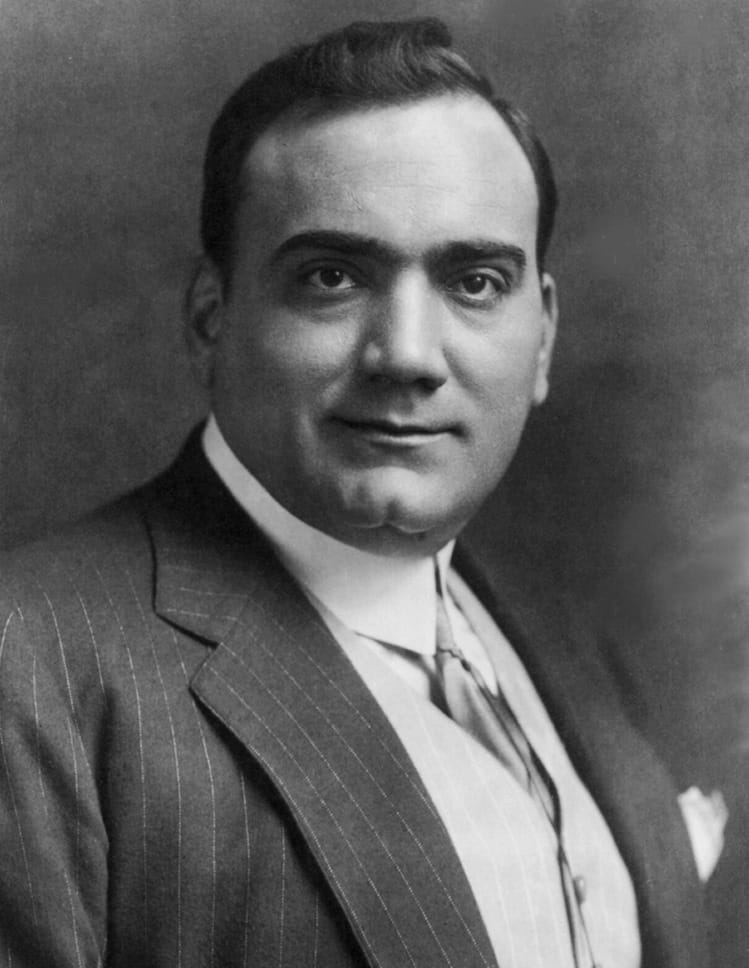
Enrico Caruso understood the power of image. He cultivated a sophisticated and elegant personal style that complemented his artistic persona. Offstage, he favored impeccably tailored suits, reflecting the refined aesthetic of the Belle Époque. Bow ties were a signature accessory, adding a touch of dapper charm to his overall appearance. His clothing was always of the highest quality, reflecting his success and status as a leading international artist.
On stage, Caruso's costumes were equally meticulous, carefully designed to reflect the specific character he was portraying. He understood the importance of visual storytelling, using his appearance to enhance the dramatic impact of his performances. He worked closely with costume designers to ensure that his attire was both historically accurate and visually striking. From the regal robes of Radames in Aida to the clownish attire of Canio in Pagliacci, Caruso's costumes were an integral part of his overall performance.
Beyond clothing, Caruso possessed a natural charisma that captivated audiences. His expressive face, combined with his powerful voice, created a magnetic presence on stage. He understood the importance of body language, using his gestures and movements to convey emotion and meaning. Even in static photographs, his intensity and passion are palpable. He was a natural performer, possessing an innate ability to connect with his audience on both an auditory and visual level. His personal caricatures also added to his artistic footprint as a man of varied talents.
Engineering & Sound Production Analysis
The limitations of early 20th-century recording technology presented significant challenges for capturing the full power and nuance of Caruso's voice. The acoustic recording process, which relied on mechanical vibrations to etch sound onto a wax disc, struggled to accurately reproduce the dynamic range and tonal complexities of his performances. Despite these limitations, Caruso's recordings remain remarkable for their ability to convey the essence of his artistry.
One of the key factors that allowed Caruso's voice to translate so effectively through early recording technology was his exceptional projection. He possessed a natural ability to project his voice with clarity and power, ensuring that it registered clearly on the recording equipment. His precise diction also played a crucial role, ensuring that his words were intelligible even through the limitations of the technology. He adapted his performance style to suit the demands of the recording process, learning to control his vibrato and modulate his volume to optimize the sound capture.
While later electrical recording techniques would offer a significant improvement in sound quality, Caruso's acoustic recordings remain invaluable historical documents. They provide a unique glimpse into the sound of one of the greatest voices of all time, allowing us to appreciate his artistry even through the filter of antiquated technology. The crackle and hiss of these early recordings are not simply artifacts of the past; they are part of the historical texture, reminding us of the technological limitations that Caruso overcame to share his gift with the world. The sheer volume of records sold bearing his name also speak to a market hungry for his talent.
Cultural Impact & Legacy
Enrico Caruso's cultural impact extends far beyond the world of opera. He was one of the first truly global superstars, his voice instantly recognizable to millions of people around the world. His recordings brought opera to a wider audience, making it accessible to those who might never have had the opportunity to attend a live performance. He effectively democratized opera, breaking down social barriers and introducing the art form to a new generation of listeners. He paved the way for future generations of opera singers to cross over into popular culture.
Caruso's success also had a profound impact on the recording industry. His recordings were among the best-selling records of their time, generating enormous revenue for the Victor Talking Machine Company. He demonstrated the commercial potential of classical music, paving the way for other classical artists to find success in the recording industry. He helped to establish the concept of the "star" recording artist, a figure whose name and image could sell records regardless of the specific repertoire.
His legacy continues to resonate today. His recordings are still widely available and continue to inspire generations of singers. He is remembered as one of the greatest tenors of all time, a figure whose voice and artistry transcended cultural boundaries. He set a new standard for vocal performance, and his influence can be heard in the work of countless singers who have followed in his footsteps. He transformed the landscape of opera and popular music, leaving an indelible mark on the cultural history of the 20th century.
Critical Reception (Then vs Now)
During his lifetime, Enrico Caruso was almost universally acclaimed as one of the greatest tenors of all time. Critics praised his powerful voice, his expressive phrasing, and his dramatic intensity. While some occasionally noted a tendency towards melodrama, the vast majority recognized his unparalleled vocal control and interpretive skill. He was celebrated as a national treasure in Italy and revered as a cultural icon throughout the world. His performances at the Metropolitan Opera were consistently sold out, and his recordings were eagerly sought after by collectors and music lovers alike.
In the years since his death, Caruso's reputation has remained largely intact. He is still widely regarded as one of the greatest tenors in history, and his recordings continue to be studied and admired by singers and musicologists. While some modern critics may point to the limitations of early recording technology or the stylistic conventions of the early 20th century, the overall consensus remains that Caruso possessed a voice of extraordinary power and beauty. There is a universal recognition of the significance of his contribution to vocal music and the recording industry.
The perspective shift from "then" to "now" mainly centers around the technological advancements and the changing tastes of audiences. While audiences of his time were captivated by the sheer novelty of hearing such a powerful voice reproduced through a machine, modern listeners are more accustomed to high-fidelity recordings and may be more critical of the sound quality of Caruso's early recordings. However, the artistic merit of his performances remains undeniable, and his legacy as a pioneering figure in the history of vocal music is secure.
Conclusion
Enrico Caruso's impact on music and culture is undeniable. From his humble beginnings in Naples to his reign as the king of the Metropolitan Opera and the Victor Talking Machine Company, his journey is a testament to his extraordinary talent, unwavering dedication, and astute understanding of the changing media landscape. He was more than just a singer; he was a cultural icon who bridged the gap between the traditional world of opera and the modern age of mass media. His voice, preserved through the nascent technology of early recording, continues to resonate with listeners today, a timeless reminder of the power and beauty of the human voice. He not only launched a thousand records but also launched opera into the modern consciousness, forever changing the way we experience and appreciate vocal artistry. His influence continues to inspire, ensuring that his legacy will endure for generations to come.