A Voice for the Ages: Introduction to Ernestine Schumann-Heink
Ernestine Schumann-Heink. The name itself resonates with the grandeur and vocal opulence of the Golden Age of Opera. Born Ernestine Rössler in Lieben, near Prague, in 1861, she rose from humble beginnings to become one of the most celebrated contraltos the world has ever known. Her career spanned over four decades, captivating audiences across Europe and America with her unparalleled vocal power, dramatic presence, and warm, engaging personality. More than just a singer, Schumann-Heink was an institution, a beloved figure whose life and career mirrored the changing landscape of the operatic world and the burgeoning recording industry. 1910-1919 A cornerstone of the 1910-1919 Music Era, their influence echoes to this day.
Schumann-Heink's remarkable story is one of perseverance and dedication. Her early life was marked by financial hardship, but her innate musical talent quickly became apparent. With the encouragement of her mother, Charlotte, herself an accomplished singer, Ernestine began her vocal training. From early performances in Dresden to her eventual triumphs at Bayreuth under the baton of Gustav Mahler, her journey was a testament to her unwavering commitment to her craft. The 1910s, the decade under consideration, represents a period of established stardom for Schumann-Heink, a time when she was firmly cemented as a leading figure in the operatic and concert worlds, her recordings widely sought after, and her performances consistently lauded.
The Vocal Colossus: Musical Style and Evolution
Schumann-Heink possessed a voice of exceptional range, depth, and power. Described as a true contralto, her lower register was particularly remarkable, possessing a richness and resonance that few could match. Her voice wasn't merely loud; it was imbued with a unique timbre, capable of conveying a wide range of emotions, from the profound sorrow of a grieving mother to the fiery rage of a betrayed queen. This dramatic versatility was a key element of her enduring appeal.
Her repertoire was vast and varied, encompassing everything from Wagnerian epics to Italian bel canto and German lieder. She was particularly celebrated for her interpretations of Wagnerian roles such as Erda in Das Rheingold and Fricka in Die Walküre. These demanding roles, requiring both vocal stamina and dramatic intensity, perfectly showcased her strengths. Schumann-Heink imbued these characters with a sense of maternal authority and ancient wisdom, making them unforgettable figures on the operatic stage.
Beyond Wagner, she also excelled in roles such as Azucena in Verdi's Il Trovatore and Ulrica in Un Ballo in Maschera. These Italian roles demonstrated her ability to adapt her vocal style to suit different musical idioms, showcasing her impressive breath control and legato phrasing. Her performances of German lieder were equally compelling, revealing a more intimate and nuanced side to her artistry. She possessed a rare ability to connect with her audience on a deeply personal level, drawing them into the emotional world of the song.
While rooted in the traditions of 19th-century vocal performance, Schumann-Heink was also receptive to new developments in the operatic world. She embraced the emerging recording technology, recognizing its potential to reach a wider audience. During the 1910s, she continued to record prolifically, leaving behind a valuable legacy of her artistry for future generations. While the limitations of early recording technology undoubtedly impacted the fidelity of these recordings, they still provide a glimpse into the magnificence of her voice and her interpretive skills.
The 'Look': Fashion & Aesthetics Deep Dive
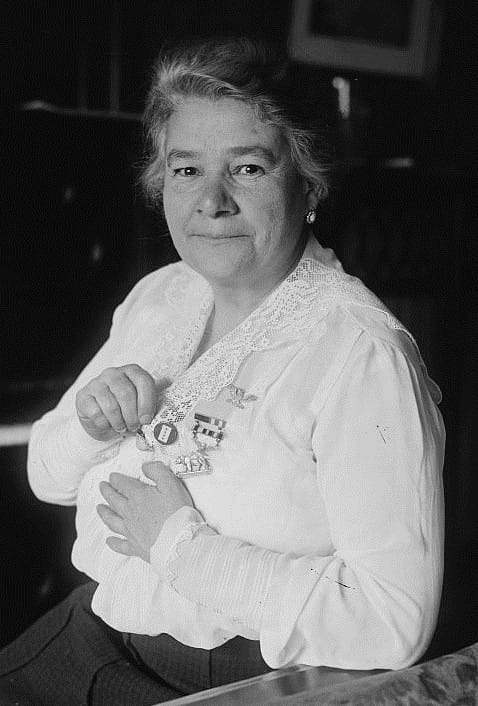
Ernestine Schumann-Heink's physical presence was as commanding as her voice. A woman of ample proportions, she defied conventional notions of operatic beauty, embracing her size and transforming it into a symbol of strength and authority. Her stage presence was undeniable, and she knew how to use her physicality to enhance her performances.
Her fashion choices reflected her status as a leading opera star. She favored elegant, flowing gowns that accentuated her figure and conveyed a sense of regal grandeur. These gowns were often made of rich fabrics such as velvet and silk, and adorned with intricate embroidery and embellishments. Colors were often deep and saturated, reflecting the dramatic nature of her roles. Her signature style included elaborate hats, often adorned with feathers, flowers, and jewels. These hats added to her commanding presence and further emphasized her status as a diva.
Jewelry played a significant role in her overall aesthetic. She favored large, statement pieces that sparkled under the stage lights. Necklaces, earrings, and bracelets were often set with diamonds, pearls, and other precious stones. These jewels not only enhanced her beauty but also served as symbols of her success and status.
Beyond her clothing and jewelry, Schumann-Heink's overall demeanor contributed to her iconic image. She carried herself with grace and confidence, radiating a sense of warmth and approachability that endeared her to audiences. She understood the power of visual communication and used her appearance to create a memorable and lasting impression.
Capturing a Colossus: Engineering & Sound Production Analysis
The early 20th century was a period of rapid development in recording technology. However, the acoustic recording methods used during Schumann-Heink's prime presented significant challenges in capturing the full range and power of her voice. These methods relied on a purely mechanical process, where sound waves were channeled through a horn and used to vibrate a diaphragm, which in turn cut grooves into a wax master.
The limitations of this technology were particularly evident in the reproduction of low frequencies. Schumann-Heink's exceptionally rich and powerful lower register, a defining characteristic of her voice, was often difficult to capture accurately. The recording horns and diaphragms of the time were not as sensitive to lower frequencies, resulting in a somewhat thinned-out sound in the lower range. Despite these limitations, her recordings remain invaluable documents of her artistry.
What does come through clearly in these recordings is her exceptional breath control, clarity of diction, and dramatic phrasing. The acoustic recording process demanded precise vocal technique, as any imperfections would be amplified by the limitations of the technology. Schumann-Heink's years of training and experience allowed her to overcome these challenges, delivering performances that are both technically impressive and emotionally compelling. The recordings, while imperfect, showcase her impeccable intonation and the sheer power of her projection.
Later in the 1920s, electrical recording began to replace the acoustic method. Unfortunately, this development came relatively late in Schumann-Heink's career, meaning that the bulk of her recordings were made using the older technology. However, even the early acoustic recordings provide a testament to her vocal prowess, leaving a valuable archive for music historians and vocal enthusiasts alike.
A Cultural Icon: Impact & Legacy
Ernestine Schumann-Heink's impact extended far beyond the confines of the opera house. She became a cultural icon, a symbol of strength, resilience, and artistic achievement. Her popularity transcended national boundaries, making her a beloved figure in both Europe and America.
Her performances during World War I were particularly noteworthy. Despite being of German descent, she wholeheartedly supported the American war effort, raising money for war bonds and performing for troops. Her patriotism endeared her to the American public and cemented her status as a national treasure. The loss of her son in the war added a layer of personal tragedy to her public persona, further solidifying her image as a strong and compassionate figure.
She was also a pioneer in the field of recording, recognizing the potential of the technology to reach a wider audience and preserve her artistry for future generations. Her recordings helped to popularize opera and classical music, bringing it to listeners who might not otherwise have had the opportunity to experience it. By readily embracing new methods of distribution, she helped shape the future of the music industry and expand the accessibility of high art.
Her legacy continues to inspire singers and music lovers today. Her recordings are still studied and admired for their technical brilliance and emotional depth. She remains a role model for aspiring opera singers, demonstrating the importance of hard work, dedication, and artistic integrity.
Critical Reception: Then vs Now
During her lifetime, Ernestine Schumann-Heink was almost universally praised for her vocal prowess and dramatic interpretations. Critics marveled at the power and range of her voice, as well as her ability to convey a wide range of emotions. She was often described as a "vocal phenomenon" and a "true diva." Her performances were consistently sold out, and she was showered with accolades and honors.
However, some critics occasionally noted a perceived lack of subtlety in her performances. While acknowledging her vocal power and dramatic intensity, they sometimes felt that her interpretations were too broad and lacked nuance. Some preferred a more refined and understated approach to certain roles. This was particularly true in the context of the evolving operatic landscape, where a more naturalistic style of acting and singing was beginning to emerge.
Today, Schumann-Heink's legacy is viewed with a more nuanced perspective. While her vocal power and dramatic intensity are still admired, critics and scholars also recognize the historical context in which she performed. Her style of singing and acting was a product of the late 19th and early 20th centuries, a time when grand opera was at its peak. Her performances are now understood as representing a particular tradition of operatic performance, one that emphasized vocal virtuosity and dramatic spectacle.
The limitations of the early recordings are also taken into account when evaluating her artistry. While the recordings cannot fully capture the richness and power of her voice, they still provide a valuable glimpse into her technical brilliance and interpretive skills. Moreover, there is a greater appreciation today for the historical significance of her recordings as documents of a bygone era of operatic performance. They offer a window into a time when opera was a central part of popular culture and when singers like Schumann-Heink were revered as cultural icons.
Conclusion: The Enduring Legend of Schumann-Heink
Ernestine Schumann-Heink was more than just a singer; she was a force of nature. Her remarkable voice, commanding stage presence, and warm personality captivated audiences for over four decades. From her early struggles to her eventual triumphs, her life and career were a testament to her unwavering dedication to her craft. During the 1910s, she stood as an established star, a beacon of vocal excellence in the operatic world.
Her legacy continues to inspire singers and music lovers today. Her recordings, despite their technical limitations, remain invaluable documents of her artistry. She remains a role model for aspiring opera singers, demonstrating the importance of hard work, dedication, and artistic integrity. She was a cultural icon, a symbol of strength, resilience, and artistic achievement.
Ernestine Schumann-Heink's name will forever be synonymous with the Golden Age of Opera. She was a true diva, a vocal colossus, and a beloved figure whose contributions to the world of music will never be forgotten. Her voice, though silenced by time, continues to resonate through her recordings, reminding us of the power and beauty of the human voice at its absolute peak.