Comprehensive Introduction
Florence Foster Jenkins. The name alone conjures images of extravagant costumes, unwavering self-belief, and, above all, a truly unique approach to operatic performance. While her most enduring fame came later in life, the seeds of her extraordinary persona were sown in the early years of the 20th century. Born into a wealthy family in Wilkes-Barre, Pennsylvania, in 1868, Narcissa Florence Foster (as she was then known) possessed a deep and abiding love for music from a young age. This passion, however, was coupled with a distinct lack of vocal talent – a fact that, remarkably, seemed to escape her notice. The period between 1900 and 1909 witnessed the burgeoning of her musical aspirations, the strengthening of her social connections, and the gradual crystallization of the character that would eventually captivate (and sometimes confound) audiences. This decade represents a crucial, often overlooked, chapter in the biography of a woman who would become a legend, not for her virtuosity, but for her sheer audacity and unwavering commitment to her artistic vision, however unconventional it may have been. 1900-1909 A cornerstone of the 1900-1909 Music Era, their influence echoes to this day.
Her initial forays into music were relatively conventional. She displayed an early aptitude for the piano, giving recitals as a child. However, her ambition extended beyond the keyboard. She yearned to be an opera singer. Parental disapproval, particularly from her father, a successful banker, presented a significant obstacle. He refused to support her singing career financially, believing it to be an unsuitable pursuit for a woman of her social standing. This early resistance likely played a role in shaping her later determination and her willingness to self-fund her artistic endeavors. The period saw her grappling with societal expectations, financial constraints, and the nascent development of a vocal “style” that would become her trademark.
The social circles she frequented in the early 1900s were instrumental in shaping her future career. Already moving in affluent circles, Jenkins began cultivating relationships with influential figures in the music and arts scene. These connections would later prove invaluable in securing performance opportunities and building a loyal following. It was during this time that she began to consciously craft her public image, cultivating a persona of eccentric charm and unwavering confidence. The decade was a period of intense self-invention, laying the groundwork for the "Florence Foster Jenkins" that would ultimately grace the stage.
In-depth Analysis of Musical Style/Evolution
Describing Florence Foster Jenkins’ “musical style” requires a redefinition of the term. To say she adhered to any established operatic tradition would be a gross misrepresentation. Instead, her approach was utterly unique, characterized by a profound disconnect between her aspirations and her technical abilities. Her pitch was consistently inaccurate, her rhythm erratic, and her breath control...well, practically nonexistent. Yet, this is precisely what made her performances so captivating, so utterly unforgettable.
During the 1900-1909 period, while her voice was likely somewhat more stable than in her later years, the seeds of her signature style were already sown. While concrete recordings from this specific period are scarce, anecdotal evidence suggests that her vocal eccentricities were already apparent. It is likely that she approached operatic repertoire with the same unwavering confidence and disregard for technical precision that would later define her. She favoured dramatic arias, particularly those requiring a powerful soprano voice, seemingly oblivious to the fact that her vocal instrument was simply not up to the task.
What distinguishes Jenkins from a mere "bad singer" is her genuine passion and her unique interpretive choices. She approached each aria with a theatrical flair, injecting her own personality and dramatic interpretation into the music. This, combined with her technical shortcomings, created a performance experience that was both unintentionally hilarious and strangely compelling. While others might strive for technical perfection, Jenkins focused on conveying emotion and embodying the spirit of the music, albeit in a highly idiosyncratic manner. It's reasonable to suggest that even at this early stage, her lack of technical proficiency was becoming part of her artistic identity. It was not just about singing wrong notes; it was about a total, almost defiant, disregard for conventional vocal technique in favour of unrestrained self-expression.
Furthermore, her repertoire choices were ambitious and demanding, further highlighting the gap between her aspirations and her abilities. Works by Mozart, Verdi, and Strauss – composers known for their challenging vocal writing – formed the cornerstone of her performances. This audacity, this willingness to tackle repertoire far beyond her capabilities, is a key element in understanding her enduring appeal. She wasn't afraid to fail, and in that fearlessness, she found a strange kind of success.
The 'Look': Fashion & Aesthetics Deep Dive
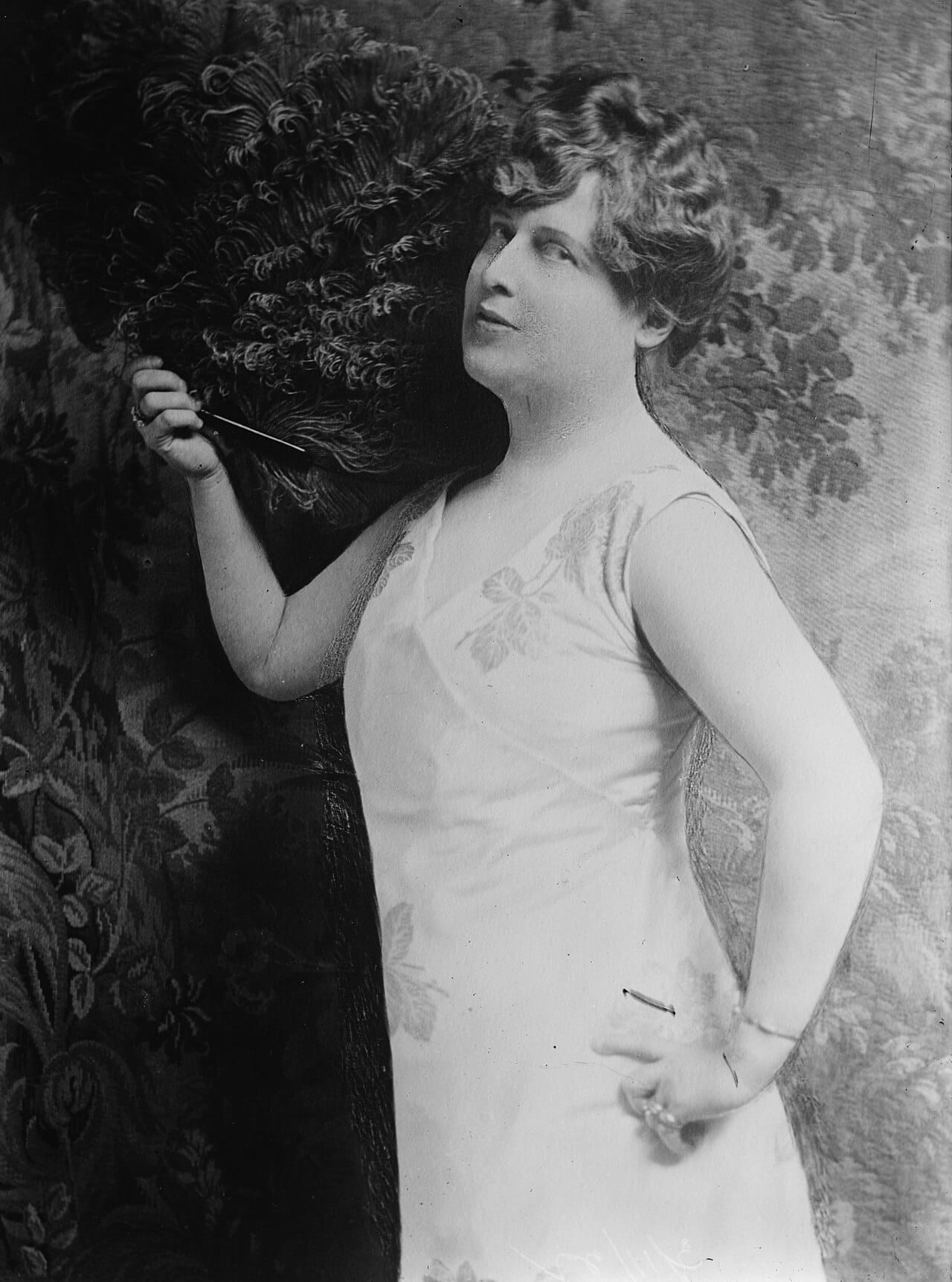
Florence Foster Jenkins’ performances were not just auditory experiences; they were visual spectacles. Even in the early 1900s, before her theatrical productions reached their peak of extravagance, her aesthetic sensibility was clearly developing. Her fashion choices reflected her flamboyant personality and her love of the dramatic. She favoured elaborate and theatrical costumes, often designing them herself. These were not mere garments; they were extensions of her artistic vision, integral to the overall performance.
While detailed visual records from this specific decade are limited, we can infer from later photographs and descriptions that her style likely involved opulent fabrics, vibrant colours, and a generous use of embellishments. Think of gowns adorned with sequins, beads, and feathers – anything that would catch the eye and enhance the drama of the performance. The "Songbird Junket," her signature costume featuring wings and feathers, may not have fully materialized at this point, but the inclination towards such theatricality was undoubtedly present. She understood the power of visual presentation and used it to amplify her artistic statement, however unconventional that statement might have been.
Beyond the clothing itself, her attention to detail extended to accessories and hairstyles. Elaborate headpieces, often adorned with flowers, feathers, or jewels, were a staple of her look. She understood the importance of creating a complete and cohesive visual image. Her aesthetic choices were not driven by current fashion trends but by her own unique sense of style and her desire to create a memorable and impactful stage presence. In a way, she was a performance artist as much as she was a singer, using her body and her clothing as instruments of expression. Her 'look' served to both mask her insecurities and simultaneously amplify her artistic vision.
This commitment to extravagant aesthetics also extended to her performance space. While she may not have had the resources to stage elaborate productions in these early years, she likely paid close attention to the details of her surroundings, ensuring that they complemented her overall aesthetic. This attention to detail, this commitment to creating a complete sensory experience, is a key element in understanding her artistic approach. She wasn't just singing; she was creating a world.
Engineering & Sound Production Analysis
While Florence Foster Jenkins' primary focus was undoubtedly on performance, her legacy is inextricably linked to the recordings she made. Although recordings from the 1900-1909 period are unlikely to exist (commercial recording technology was still in its infancy, and Jenkins herself was not yet a major figure), it's crucial to understand the technological context of the time to appreciate the limitations and possibilities that would later shape her recorded output.
The early 20th century was a period of rapid innovation in sound recording. The gramophone, invented by Emile Berliner, was becoming increasingly popular, allowing for the mass production and distribution of recorded music. However, recording techniques were still relatively primitive. Acoustic recording, in which sound waves were directly captured onto a wax cylinder or disc, was the dominant method. This process required performers to project their voices directly into a recording horn, resulting in a sound that was often compressed and distorted. The dynamic range was limited, and subtle nuances of performance were often lost.
Given these limitations, it's fascinating to imagine what a recording of Florence Foster Jenkins from this era might have sounded like. The raw, unfiltered nature of acoustic recording would have undoubtedly amplified her vocal eccentricities. The lack of sophisticated editing techniques would have meant that her performances were captured exactly as they were, with all their imperfections intact. In a way, this rawness might have even enhanced the unique appeal of her voice. Without the artificial polish of modern recording techniques, the listener would be confronted with the unvarnished reality of her performance – a truly unforgettable sonic experience.
Later in her career, when electric recording became more prevalent, her recordings captured more of her 'performance' than her actual voice, which has given rise to much of her popularity and cult following.
Cultural Impact & Legacy
While Florence Foster Jenkins' cultural impact was limited during the 1900-1909 period, the seeds of her future fame were being sown. Her unwavering commitment to her art, her flamboyant personality, and her willingness to defy convention were already attracting attention within her social circles. She was, in essence, becoming a local phenomenon, a subject of both amusement and admiration.
Her legacy, however, extends far beyond her immediate circle of acquaintances. She became a symbol of artistic freedom, a testament to the power of self-belief, and a reminder that success can be defined in many different ways. She challenged conventional notions of talent and achievement, demonstrating that passion and dedication can be just as important as technical skill. Her story has resonated with audiences across generations, inspiring countless individuals to pursue their dreams, regardless of their limitations.
The fact that her recordings continue to be enjoyed (and dissected) decades after her death is a testament to her enduring appeal. She has become a cult figure, celebrated for her unique approach to music and her unwavering commitment to her artistic vision. Her story has been immortalized in plays, films, and documentaries, further solidifying her place in popular culture. She represents a rejection of perfectionism and an embrace of the joy of creation, a message that is particularly relevant in today's highly competitive and often judgmental world.
It is important to note that the concept of "so bad it's good" has become associated with Jenkins' legacy. While some may dismiss her as simply a terrible singer, her performances offer a complex and multifaceted experience. They are both unintentionally humorous and strangely moving, a testament to the power of human expression in its purest form. She transcended mere incompetence to become a cultural icon, a symbol of artistic freedom and unwavering self-belief.
Critical Reception (Then vs Now)
Critical reception to Florence Foster Jenkins' performances was mixed, to put it mildly. While some critics recognized her genuine passion and the entertainment value she brought to her recitals, others were less charitable. During the 1900-1909 period, reviews were likely limited to local newspapers and society publications, and they may have been more focused on her social standing and her extravagant costumes than on her actual vocal abilities. It's reasonable to assume that some critics were hesitant to be overly harsh, given her wealth and social connections.
However, even in these early years, it's unlikely that her vocal shortcomings went unnoticed. Reviews may have been couched in polite terms, but the underlying message would have been clear: she was not a technically proficient singer. Yet, it's also likely that some critics recognized her unique appeal and the entertainment value of her performances. She was, after all, a captivating personality, and her recitals were undoubtedly memorable events.
In contrast, modern critical reception is far more nuanced. While her vocal abilities are still widely acknowledged to be lacking, her legacy is now viewed through a more complex and sympathetic lens. Critics often focus on her unwavering self-belief, her passion for music, and the unintentional humor that permeated her performances. She is no longer simply dismissed as a "bad singer" but is instead celebrated as a cultural icon, a symbol of artistic freedom, and a testament to the power of self-expression. Many critics celebrate her defiance and the fun of her performances, overlooking (or perhaps enjoying!) the technical flaws.
The passage of time has allowed for a more objective assessment of her work, free from the social pressures and expectations of her era. Today, she is recognized as a unique and unforgettable performer, whose legacy continues to inspire and entertain audiences around the world. The evolution of critical reception reflects a broader shift in cultural values, a greater appreciation for artistic expression in all its forms, and a willingness to embrace imperfection.
Conclusion
The period between 1900 and 1909 represents a crucial formative stage in the life of Florence Foster Jenkins. It was a time of burgeoning musical aspirations, the development of a unique artistic persona, and the cultivation of social connections that would later prove invaluable. While her most enduring fame came later in life, the seeds of her extraordinary legacy were sown during these early years. She was a woman of unwavering self-belief, a flamboyant personality, and an unshakeable commitment to her artistic vision, however unconventional it may have been.
Even during this nascent phase of her career, her performances were characterized by a distinct lack of technical proficiency, a flamboyant aesthetic, and a genuine passion for music. She was already challenging conventional notions of talent and achievement, demonstrating that passion and dedication can be just as important as technical skill. Her story is a testament to the power of self-belief and a reminder that success can be defined in many different ways.
Florence Foster Jenkins' legacy extends far beyond her vocal abilities. She became a symbol of artistic freedom, a cultural icon, and a reminder that it is possible to achieve greatness, even in the face of adversity. Her story continues to inspire and entertain audiences around the world, solidifying her place in history as one of the most unique and unforgettable performers of the 20th century. Her journey from a young woman with musical aspirations to a celebrated cult figure is a remarkable tale of self-invention, artistic audacity, and unwavering self-belief.