The dawn of the 20th century witnessed the flourishing of countless artistic talents, many of whom have since faded from the collective memory. Among these forgotten figures stands Juliette Drouet, a captivating soprano who graced the Parisian stage during the Edwardian era. While her name may not resonate with contemporary audiences, Drouet's story is a testament to the vibrant artistic landscape of the time, a period characterized by burgeoning technological advancements in sound recording and a passionate appreciation for operatic and art song traditions. This biography aims to resurrect Drouet's legacy, exploring her musical style, stage presence, fashion sensibilities, and the critical reception she garnered, ultimately painting a portrait of a talented artist navigating the complexities of a rapidly changing world. 1900-1909 Historically, they are inseparable from the identity of the 1900-1909 Music Era.
In-depth Analysis of Musical Style/Evolution
Juliette Drouet's repertoire primarily consisted of operatic arias and art songs, staples of Parisian salons and concert halls during the early 1900s. These venues, often intimate and exclusive, provided a platform for showcasing vocal virtuosity and dramatic interpretation. The prevalent musical trends of the time were heavily influenced by Romanticism, characterized by heightened emotional expression, lyrical melodies, and a focus on individual experience. Composers like Massenet, Debussy, and Fauré dominated the scene, their works becoming integral parts of Drouet's performing repertoire.
Drouet likely honed her vocal technique through rigorous training, a common practice for aspiring opera singers of the era. Her style was reportedly marked by a precise vocal control and emotional depth. Operatic arias demanded not only technical proficiency but also the ability to convey a wide range of emotions through vocal nuances and dramatic delivery. Art songs, on the other hand, emphasized lyrical beauty and textual interpretation, requiring a more subtle and intimate approach. Drouet's reported ability to master both genres suggests a versatile talent capable of adapting her performance style to suit the specific demands of each musical form.
Unfortunately, the scarcity of surviving recordings makes it difficult to definitively trace the evolution of Drouet's musical style. However, considering the prevailing musical climate and the training she likely received, it can be inferred that she developed a sophisticated understanding of vocal ornamentation, phrasing, and dynamics. Her performances were probably characterized by a careful balance between technical precision and emotional expression, reflecting the Romantic sensibilities of the time. While impossible to say for certain without documented evidence, the existing critical commentary points to her adeptness at storytelling via song.
The 'Look': Fashion & Aesthetics Deep Dive
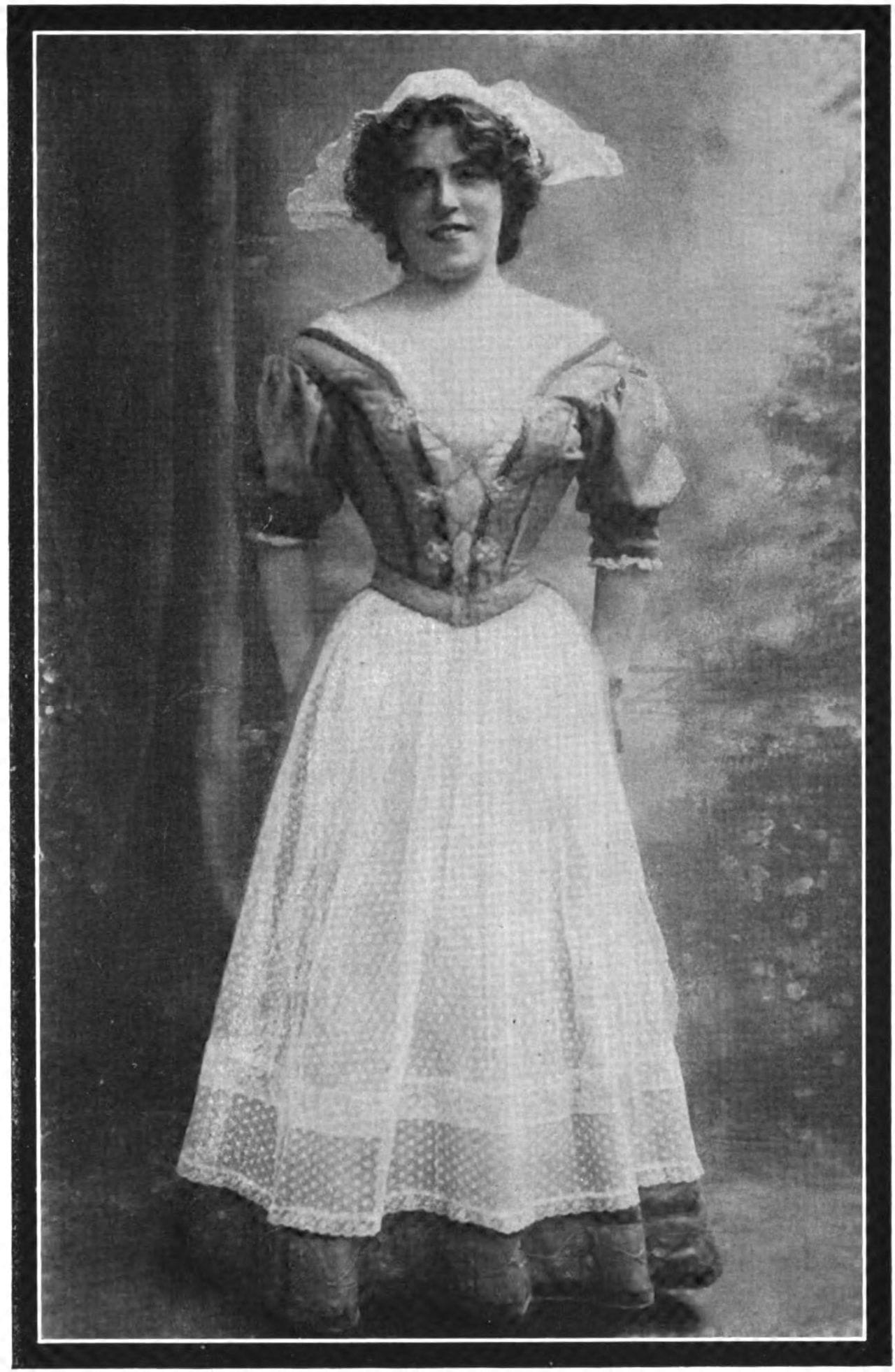
Juliette Drouet understood the power of visual presentation, embracing the elegant silhouettes and opulent embellishments that defined Edwardian fashion. Her stage costumes and personal style reflected the era's emphasis on femininity, refinement, and theatrical flair. Elaborate gowns, often adorned with lace, feathers, and intricate embroidery, were essential components of her performances. These dresses, with their high necklines, S-bend corsets, and flowing skirts, created a visually striking image that complemented her vocal performances.
The dramatic hats that Drouet frequently wore were perhaps her most distinctive accessory. Large, wide-brimmed hats decorated with plumes, ribbons, and artificial flowers were a ubiquitous fashion statement during the Edwardian era, symbolizing status and sophistication. For Drouet, these hats served not only as fashion accessories but also as theatrical props, enhancing her stage presence and adding an element of drama to her overall appearance. The combination of elaborate gowns and dramatic hats created a visually captivating image that undoubtedly contributed to her popularity.
Beyond the specific garments and accessories, Drouet's overall aesthetic reflected the prevailing ideals of beauty and femininity during the Edwardian era. Her carefully styled hair, delicate makeup, and graceful posture all contributed to her image as a refined and sophisticated performer. She understood that her appearance was an integral part of her performance, and she used fashion and aesthetics to enhance her character portrayals and connect with her audience.
Engineering & Sound Production Analysis
Understanding the limitations of recording technology in the early 1900s is crucial when assessing Juliette Drouet's vocal prowess. The nascent recording techniques of the time, primarily acoustic recording, captured sound waves using mechanical horns and diaphragms, resulting in recordings that were often distorted and lacked the fidelity of modern recordings. Therefore, surviving documentation of Drouet's vocal abilities relies heavily on contemporary accounts and critical reviews.
These accounts frequently praised Drouet's powerful projection and nuanced phrasing, suggesting a well-honed understanding of vocal technique. Her ability to project her voice effectively was particularly important in the context of live performances, where she had to fill large theaters and concert halls without the aid of amplification. Nuanced phrasing, on the other hand, indicated a sophisticated understanding of musical interpretation and the ability to convey subtle emotions through vocal variations.
Given the absence of high-quality recordings, it is challenging to analyze Drouet's vocal timbre, range, and vibrato with complete accuracy. However, based on contemporary descriptions and the demands of the operatic and art song repertoire she performed, it can be inferred that she possessed a well-trained soprano voice with a wide range and a flexible vocal technique. The fact that critics noted both power and subtlety suggests a voice capable of dramatic outbursts as well as delicate, intimate passages. The acoustic environment of performance venues undoubtedly shaped her vocal projection techniques, emphasizing clarity and focused tone.
Cultural Impact & Legacy
While Juliette Drouet may not have achieved international fame, her career undoubtedly contributed to the vibrant cultural landscape of Parisian society during the early 1900s. As a performer in salons and concert halls, she played a role in disseminating popular operatic arias and art songs, enriching the musical experiences of her audiences. Her performances also provided a platform for showcasing the works of contemporary composers, contributing to the evolution of musical trends and tastes.
Drouet's impact, though regional, should not be dismissed. She represented a significant segment of the performing arts community: talented individuals who thrived in local contexts, contributing to the overall richness and diversity of artistic expression. Her dedication to her craft and her ability to connect with audiences through her voice and stage presence made her a valuable asset to the cultural scene of her time. The very act of performance, especially in an era before mass media, held significant cultural weight, fostering a sense of community and shared experience.
Unfortunately, the transient nature of live performance and the limitations of recording technology have contributed to the obscurity of Drouet's legacy. Without surviving recordings or extensive documentation, it is difficult to fully assess her cultural impact. However, by piecing together fragments of information from contemporary accounts and critical reviews, it is possible to gain a glimpse into her artistic contributions and appreciate her role as a talented performer in a vibrant cultural era.
Critical Reception (Then vs Now)
Contemporary reviews of Juliette Drouet's performances reveal a division in critical reception, highlighting the subjective nature of artistic appreciation. While some critics praised her dramatic interpretations and vocal prowess, others found her style overly sentimental or derivative of established opera stars. This divergence of opinion reflects the prevailing critical standards of the time, which emphasized both technical virtuosity and originality of expression.
Critics who lauded Drouet's performances often focused on her emotional depth and ability to connect with audiences on a personal level. They may have praised her dramatic interpretations, highlighting her ability to embody the characters she portrayed and convey a wide range of emotions through her voice and stage presence. These reviewers likely appreciated her technical skill as well, recognizing her vocal control, phrasing, and dynamics.
On the other hand, critics who found her style overly sentimental or derivative may have been seeking a more innovative or groundbreaking approach to performance. They may have felt that Drouet's interpretations lacked originality or that she relied too heavily on established conventions. These reviewers may have preferred a more restrained or intellectual style of performance, valuing subtlety and nuance over overt emotional expression. This could point towards a growing avant-garde movement beginning to push back on Romantic excess. Without access to those specific reviews, however, it remains speculative.
Today, it is difficult to offer a definitive reassessment of Drouet's critical reception due to the scarcity of surviving recordings. However, by considering the prevailing critical standards of the time and the limited information available, it is possible to gain a more nuanced understanding of the challenges she faced as a performer and the subjective nature of artistic judgment. Her lasting absence from popular culture may itself be considered a form of historical 'criticism', reflecting the selective nature of historical memory.
Conclusion
Juliette Drouet's story serves as a reminder of the countless talented artists who have contributed to the richness and diversity of cultural history, only to be largely forgotten by subsequent generations. While the limitations of surviving documentation make it difficult to fully reconstruct her career and assess her artistic contributions, the fragments of information available offer a glimpse into her talent, her dedication, and her place within the vibrant artistic landscape of Parisian society during the early 1900s.
By exploring her musical style, stage presence, fashion sensibilities, and critical reception, we can begin to appreciate Drouet as more than just a name in a history book. She was a real person, a talented performer, and a product of her time. Her story reminds us that history is not just about famous figures and groundbreaking achievements, but also about the countless individuals who have contributed to the cultural tapestry of their societies. By resurrecting these forgotten figures, we can gain a deeper understanding of the past and a greater appreciation for the richness and complexity of human experience.