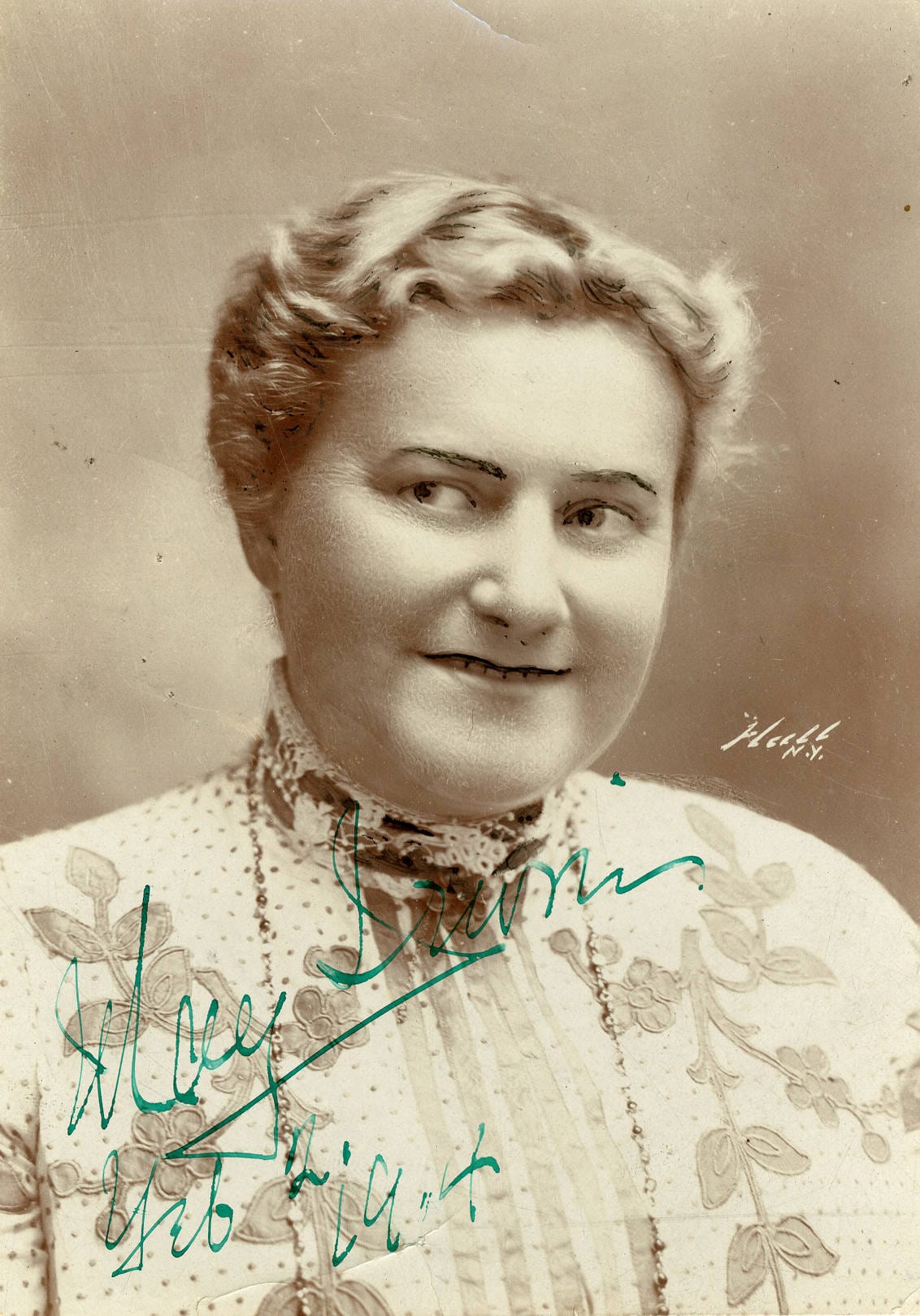
May Irwin, a name synonymous with the vaudeville era, was a multifaceted entertainer who conquered the stage, the early recording industry, and even the nascent world of cinema in the late 19th and early 20th centuries. While celebrated in her time as a comedic powerhouse and a champion of popular song, her legacy is now viewed through a more complex lens, particularly due to her association with “coon songs,” a genre deeply rooted in racist minstrelsy traditions. This biography delves into Irwin’s life, career, and the enduring, if complicated, impact she had on American entertainment. 1900-1909 To truly appreciate the 1900-1909 Music Era, one must understand the impact of this artist.
A Star is Born: Early Life and Vaudeville Beginnings
Born Georgia May Irwin in Whitby, Ontario, Canada, in 1862, her path to stardom began early. Following the tragic death of her father when she was just a child, Irwin and her sister, Flora, began performing as a singing duo to support their family. Their talent quickly garnered attention, leading them to the burgeoning vaudeville scene in the United States. By the 1870s, they were a fixture in Tony Pastor’s variety shows, a crucial training ground for many future stars. Vaudeville, with its eclectic mix of song, dance, comedy, and novelty acts, proved to be the ideal platform for Irwin to hone her comedic timing, vocal prowess, and ability to connect with audiences. While Flora eventually left the stage, May's star continued its meteoric rise. She developed a solo act characterized by broad humor, exaggerated gestures, and a knack for delivering a punchline that resonated with audiences from all walks of life.
In-depth Analysis of Musical Style/Evolution
Irwin’s musical style was deeply intertwined with the popular trends of her time, but she also brought a unique flair that set her apart. Initially, her repertoire consisted of sentimental ballads and popular tunes, but she quickly gravitated towards more comedic material, particularly "coon songs." These songs, characterized by exaggerated dialect, stereotypical depictions of African Americans, and often demeaning narratives, were a product of the minstrel tradition that still held sway in American popular culture. While Irwin did not originate the genre, she became one of its most prominent and successful interpreters. Her performances of songs like "The Bully Song" (1895), which became a signature piece, showcased her powerful voice and her ability to project a character with both humor and confidence. Over time, Irwin's musical style evolved, reflecting the changing tastes of her audiences. She incorporated elements of ragtime, a new and exciting musical form that was sweeping the nation. Her performances retained their comedic edge, but she also began to explore more nuanced characters and stories in her songs. She understood the power of performance and crafted her stage persona to be larger than life. Her delivery was always clear and deliberate, ensuring that every word and every comedic nuance was understood by her audience. She often interacted with the audience, breaking the fourth wall and drawing them into her performance. This level of engagement contributed to her immense popularity and solidified her position as a vaudeville headliner.
The 'Look': Fashion & Aesthetics Deep Dive
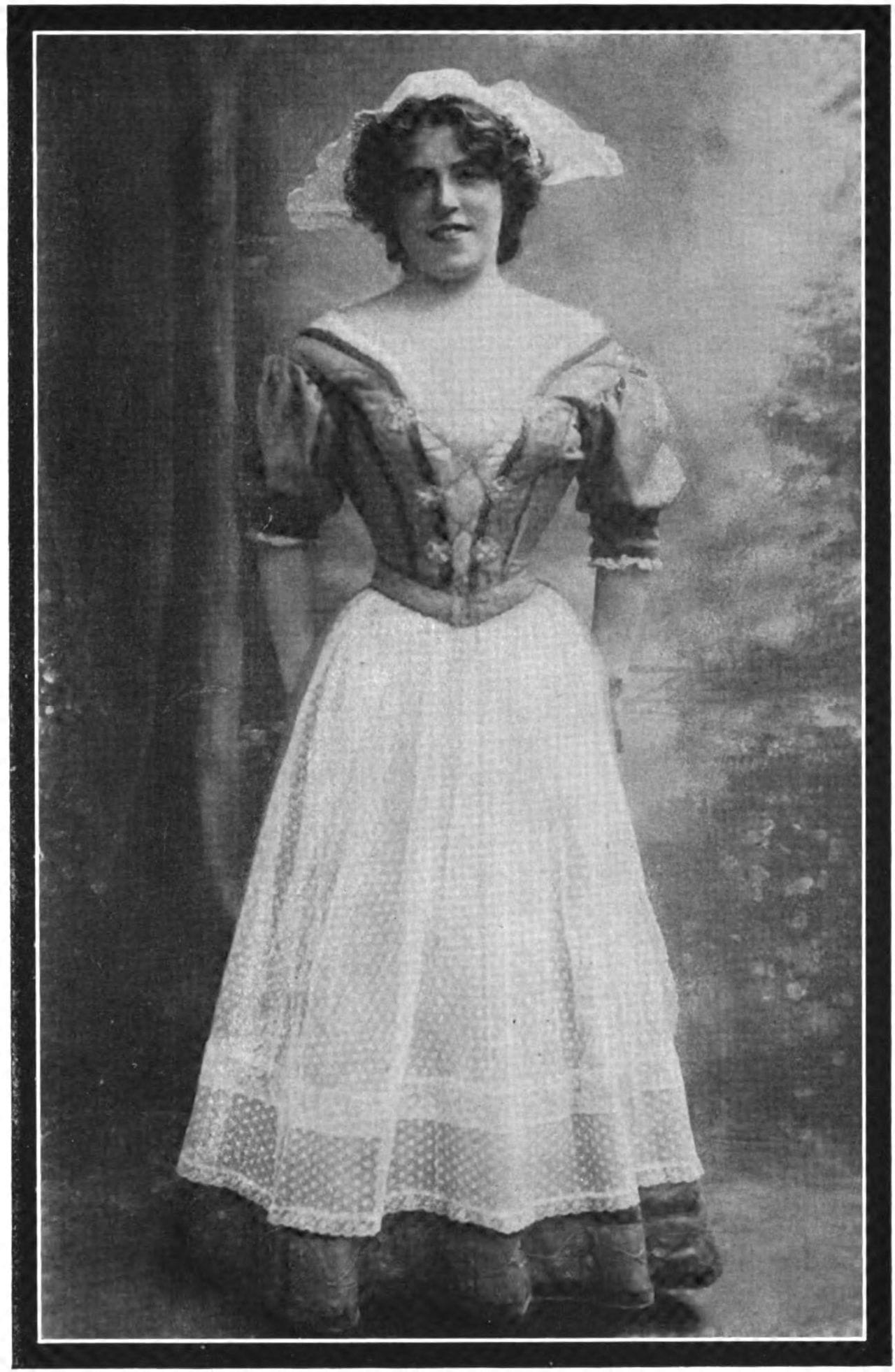
May Irwin's stage presence was meticulously crafted, and her fashion choices played a crucial role in defining her persona. In an era when female performers were often subjected to strict beauty standards, Irwin presented a different image. She was not a delicate ingenue, but rather a woman of ample proportions who exuded confidence and warmth. Her costumes were designed to accentuate her figure and project an image of matronly authority. She favored elaborate dresses made from rich fabrics such as velvet and silk, often adorned with lace, beads, and other embellishments. These dresses were not only visually striking but also practical, allowing for freedom of movement while maintaining a sense of decorum. Hats were an integral part of Irwin's signature look. She sported enormous, extravagant hats trimmed with feathers, flowers, and ribbons. These hats served to frame her face and draw attention to her expressive features. Her overall aesthetic was one of comfortable elegance, suggesting a woman who was both successful and approachable. This image resonated with audiences, particularly women, who saw in Irwin a reflection of themselves – a woman who had achieved success on her own terms, without sacrificing her sense of self.
Engineering & Sound Production Analysis
May Irwin's career coincided with the dawn of the recording industry. Her recordings, though rudimentary by modern standards, offer invaluable insights into early sound production techniques. "The Bully Song" is considered one of the earliest commercially successful recordings by a woman, and it provides a glimpse into the challenges and possibilities of capturing live performance on record. The limitations of early recording technology meant that performers had to project their voices with exceptional clarity and power. Irwin's vocal delivery on these recordings is remarkably clear, demonstrating her ability to control her voice and articulate each word with precision. The recording process itself was a collaborative effort between the performer and the sound engineers. Microphones were still in their infancy, and placement was crucial to achieving optimal sound quality. The engineers would have worked closely with Irwin to position her in the studio to capture her voice effectively. The recordings often capture not only Irwin's voice but also the sounds of the studio environment, adding to their historical significance. These recordings stand as a testament to Irwin's talent and adaptability, showcasing her ability to adapt her performance style to the demands of a new medium.
Cultural Impact & Legacy
May Irwin was a cultural icon of her time, celebrated for her comedic talent, her powerful voice, and her ability to connect with audiences on a personal level. She was a pioneer in vaudeville, paving the way for future female performers. Her success in the recording industry helped to popularize the new medium and establish it as a viable form of entertainment. She even ventured into the world of early cinema, starring in a short film called "The Kiss" (1896), which is considered one of the first films ever made. The film, which depicted a brief kiss between Irwin and her co-star John Rice, caused a sensation and sparked controversy, further solidifying Irwin's status as a cultural phenomenon. However, Irwin's legacy is inextricably linked to the controversy surrounding "coon songs." While she was undoubtedly popular in her time, her association with this genre has cast a shadow on her reputation. These songs, which perpetuated harmful stereotypes and caricatures of African Americans, are now recognized as deeply racist and offensive. Irwin's participation in this genre raises difficult questions about cultural appropriation and representation in entertainment history. While it is important to acknowledge her contributions to vaudeville and early cinema, it is equally important to recognize the problematic aspects of her repertoire and the harm it caused to African American communities.
Critical Reception (Then vs Now)
During her lifetime, May Irwin was met with almost universal acclaim. Critics lauded her comedic timing, her powerful voice, and her ability to captivate audiences. She was described as a "Queen of Comedy" and a "Vaudeville Star," and her performances were consistently praised for their energy and entertainment value. Audiences flocked to see her shows, and her recordings were bestsellers. She was a true celebrity, whose name was known throughout the United States and beyond. Today, Irwin's legacy is viewed with a more critical eye. While her talent and contributions to vaudeville and early cinema are still acknowledged, her association with "coon songs" has significantly impacted her reputation. Contemporary critics recognize the racist nature of these songs and question Irwin's complicity in perpetuating harmful stereotypes. While some argue that she was simply a product of her time and should not be judged by modern standards, others maintain that she had a responsibility to use her platform to promote positive representations of African Americans. The debate over Irwin's legacy continues, reflecting the ongoing struggle to reconcile the complexities of the past with the values of the present.
Conclusion
May Irwin was a complex and contradictory figure. She was a talented performer who achieved immense success in a male-dominated industry. She was a pioneer in vaudeville, early cinema, and the recording industry. But she was also a performer who profited from the perpetuation of racist stereotypes. Her legacy serves as a reminder of the complicated history of American entertainment and the ongoing need to critically examine the representations and narratives that shape our understanding of the past. May Irwin's story is not just about her personal achievements; it is about the cultural context in which she lived and worked, and the enduring impact of her choices on the entertainment landscape.