Era:
Scott Joplin, often hailed as the "King of Ragtime," stands as a pivotal figure in American music history. His compositions, characterized by their infectious rhythms, intricate syncopation, and elegant melodies, not only defined the ragtime era but also paved the way for future generations of musicians and genres. Born into humble circumstances in late 1868 (or early 1869), Joplin's journey from the Texarkana backwoods to the concert halls of the nation is a testament to his extraordinary talent, unwavering dedication, and profound impact on the cultural landscape. This biography delves into the life, music, and enduring legacy of Scott Joplin, exploring his artistic evolution, the social context of his work, and the critical reception he faced, both during his lifetime and in the decades since his passing. 1910-1919 Few artists better represent the spirit of the 1910-1919 Music Era.
In-depth Analysis of Musical Style/Evolution
Joplin's musical style represents a fascinating fusion of classical European traditions and African-American musical idioms. While rooted in the syncopated rhythms of African-American folk music, particularly the banjo tunes and "jig piano" styles prevalent in the late 19th century, Joplin’s ragtime transcended mere imitation. He meticulously crafted his compositions, imbuing them with a sophistication and structural integrity that elevated ragtime from a popular dance music to a legitimate art form.
His signature sound is characterized by a steady, march-like bassline that provides a solid foundation for the playfully syncopated melody in the right hand. This “ragged” rhythm, created by accenting off-beats and employing complex rhythmic patterns, gives ragtime its distinctive, lively character. However, Joplin’s music is far from simply a collection of catchy tunes. He paid meticulous attention to form, often employing structures borrowed from classical music, such as the rondo or theme and variations. His rags typically consist of several distinct strains, each 16 bars in length, arranged in a specific order and often repeated. This careful attention to form, combined with his harmonic sophistication and melodic invention, distinguishes Joplin's work from the more improvisational and less structured forms of early ragtime.
Joplin’s musical evolution is evident in his compositional output. Early rags, like "Original Rags" (1899), demonstrate a raw energy and exuberance, while later works, such as "The Entertainer" (1902) and "Solace" (1909), showcase a greater melodic subtlety and harmonic complexity. He also ventured into other genres, including waltzes ("Bethena," 1905), marches ("Great Crush Collision March," 1896), and even an opera, "Treemonisha" (1911), which was his most ambitious and ultimately most tragic artistic endeavor. "Treemonisha" represents a culmination of Joplin’s artistic vision, aiming to fuse ragtime rhythms with the grand traditions of European opera. The opera's story, set in rural Arkansas in 1884, tells the tale of a young woman who is chosen to lead her community away from superstition and towards education and enlightenment. The score incorporates elements of ragtime, spirituals, and other African-American musical traditions, creating a unique and powerful artistic statement.
The 'Look': Fashion & Aesthetics Deep Dive
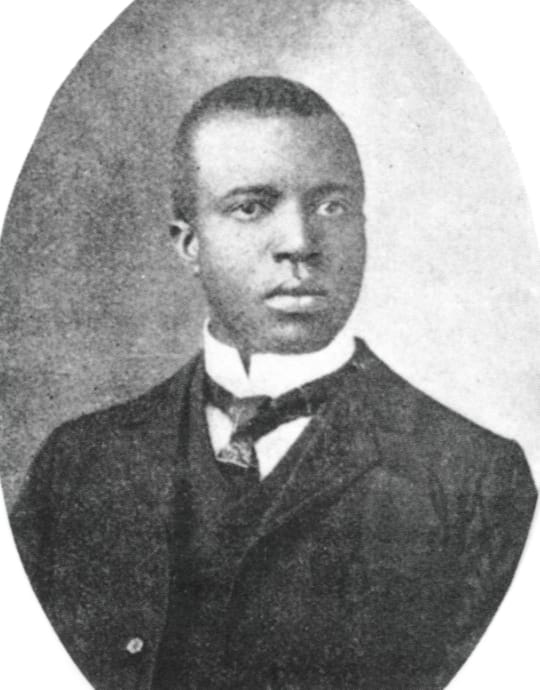
While Scott Joplin's impact on music is undeniable, his personal presentation and aesthetic sensibilities also offer insight into his artistic aspirations and the social context in which he operated. He wasn't a flamboyant showman in the mold of some other popular musicians of the era. Instead, he cultivated an image of dignity and respectability, mirroring the artistic aspirations he held for his music. He understood that the perception of ragtime, particularly among the established classical music circles, was crucial to its acceptance and recognition.
Photographs and accounts of Joplin consistently portray him as a man of understated elegance. He favored neatly tailored suits, often dark in color, paired with crisp shirts and ties. This formal attire was not merely a matter of personal preference; it was a deliberate statement. By presenting himself in this manner, Joplin sought to elevate the perception of ragtime from a lowbrow form of entertainment to a legitimate art form worthy of serious consideration. His composed demeanor and dignified appearance reinforced the formality and structural integrity he infused into his compositions. In an era marked by racial prejudice and discrimination, Joplin's carefully cultivated image challenged prevailing stereotypes and asserted his place as a refined artist.
Moreover, Joplin's dedication to the meticulous notation and publication of his music speaks to his aesthetic values. He insisted on precise transcriptions and arrangements, ensuring that his compositions would be performed accurately and consistently. This emphasis on detail extended to the visual presentation of his sheet music, which often featured elegant cover designs and clear, legible notation. He understood that the visual aspect of his work played a role in shaping its reception and establishing its artistic credibility.
Engineering & Sound Production Analysis
While Scott Joplin's era predated modern studio recording technology, his understanding of music reproduction and distribution was remarkably advanced for his time. He recognized the potential of piano rolls as a means of preserving and disseminating his music to a wider audience. These piano rolls, meticulously punched with perforations that corresponded to the notes and rhythms of his compositions, allowed automated player pianos to reproduce his music with remarkable accuracy.
Joplin wasn't merely interested in creating simple transcriptions of his music; he sought to capture the nuances of his performance style, including his phrasing, dynamics, and rhythmic subtleties. The process of creating piano rolls involved careful attention to detail, requiring Joplin to adjust the weight and pressure with which he played the piano keys to ensure that the perforations accurately reflected his intended interpretation. These piano rolls offer invaluable insight into Joplin's performance practice, providing a glimpse into the way he approached his music and the expressive qualities he sought to convey. They served as a crucial means of distribution, allowing individuals who lacked the skill or opportunity to hear Joplin perform live to experience his music in their own homes.
Furthermore, the engineering and production of piano rolls required a degree of technical sophistication that is often overlooked. The punching machines used to create the perforations were complex mechanical devices, and the process of calibrating and maintaining these machines required specialized knowledge. Joplin's involvement in the creation of piano rolls demonstrates his understanding of these technical aspects and his commitment to ensuring the highest possible quality in the reproduction of his music. While he may not have been an engineer in the modern sense, his meticulous approach to musical notation, arrangement, and reproduction reveals a keen awareness of the technological possibilities of his time.
Cultural Impact & Legacy
Scott Joplin's cultural impact extends far beyond the realm of music. He not only popularized ragtime but also helped to challenge racial stereotypes and pave the way for greater acceptance of African-American musicians in the mainstream. His music provided a soundtrack for a rapidly changing America, capturing the energy and optimism of the turn of the century. Ragtime's syncopated rhythms and infectious melodies resonated with audiences of all backgrounds, contributing to its widespread popularity and influence.
The ragtime craze of the early 20th century had a profound impact on American culture, influencing everything from popular dance styles to fashion and literature. Ragtime music was intrinsically linked to dance, inspiring lively and energetic steps like the "Turkey Trot" and the "Grizzly Bear." These dances, characterized by their improvisational nature and playful movements, reflected the spirit of ragtime and contributed to its widespread appeal. Furthermore, ragtime's influence can be seen in the works of writers like F. Scott Fitzgerald, who captured the spirit of the Jazz Age in novels like "The Great Gatsby," which captured the era's rebellious attitudes and celebratory mood.
The rediscovery of Scott Joplin's music in the 1970s, largely fueled by the popularity of the film "The Sting," which featured "The Entertainer" as its theme song, brought his work to a new generation of listeners. This revival not only reignited interest in ragtime but also led to a reevaluation of Joplin's contributions to American music. His opera "Treemonisha," which had been largely forgotten during his lifetime, was finally staged in its entirety, receiving critical acclaim and solidifying Joplin's status as a major American composer. Today, Scott Joplin is recognized as a seminal figure in American music history, and his compositions continue to be performed, recorded, and enjoyed by audiences around the world.
Critical Reception (Then vs Now)
The critical reception of Scott Joplin's music during his lifetime was mixed, reflecting the racial prejudices and cultural biases of the era. While he achieved some commercial success and garnered a loyal following, he also faced dismissal and derision from the classical music establishment, who viewed ragtime as a frivolous and unsophisticated form of entertainment. Many critics dismissed ragtime as "coon songs" or "jungle music," perpetuating racist stereotypes and ignoring its artistic merit.
The limited recognition afforded to his opera "Treemonisha" was a particularly bitter blow to Joplin. He poured years of his life into composing and staging the opera, believing it to be his masterpiece. However, he struggled to find financial support and critical acclaim for the work. The opera's themes of education, self-reliance, and racial uplift were ahead of their time, and many critics were unable to appreciate its artistic and social significance. The failure of "Treemonisha" contributed to Joplin's declining health and eventual death in 1917. He died believing that his most ambitious artistic achievement had been rejected and forgotten.
In stark contrast to the critical reception he received during his lifetime, Scott Joplin is now widely regarded as a major American composer. His music is celebrated for its originality, sophistication, and enduring appeal. Scholars and critics have recognized the significance of his contributions to the development of American music and have challenged the racist stereotypes that once plagued his reputation. The rediscovery of "Treemonisha" in the 1970s led to a renewed appreciation of Joplin's artistic vision and cemented his place in the pantheon of great American composers. Today, his music is taught in schools and universities, performed in concert halls around the world, and enjoyed by millions of listeners of all backgrounds. The current view sees his efforts as a pivotal effort to be taken seriously by the classical establishment, regardless of his race.
Conclusion
Scott Joplin's life was a testament to the power of artistic vision and the enduring relevance of cultural heritage. Despite facing numerous obstacles, including racial prejudice and limited recognition, he persevered in his pursuit of musical excellence. His compositions, characterized by their infectious rhythms, intricate syncopation, and elegant melodies, not only defined the ragtime era but also paved the way for future generations of musicians and genres. His legacy extends far beyond the realm of music, inspiring artists, scholars, and audiences around the world. Scott Joplin, the "King of Ragtime," remains a vital and enduring voice in the American musical landscape, his music a timeless celebration of creativity, innovation, and cultural diversity.
© Music Artist Vault. All rights reserved.